
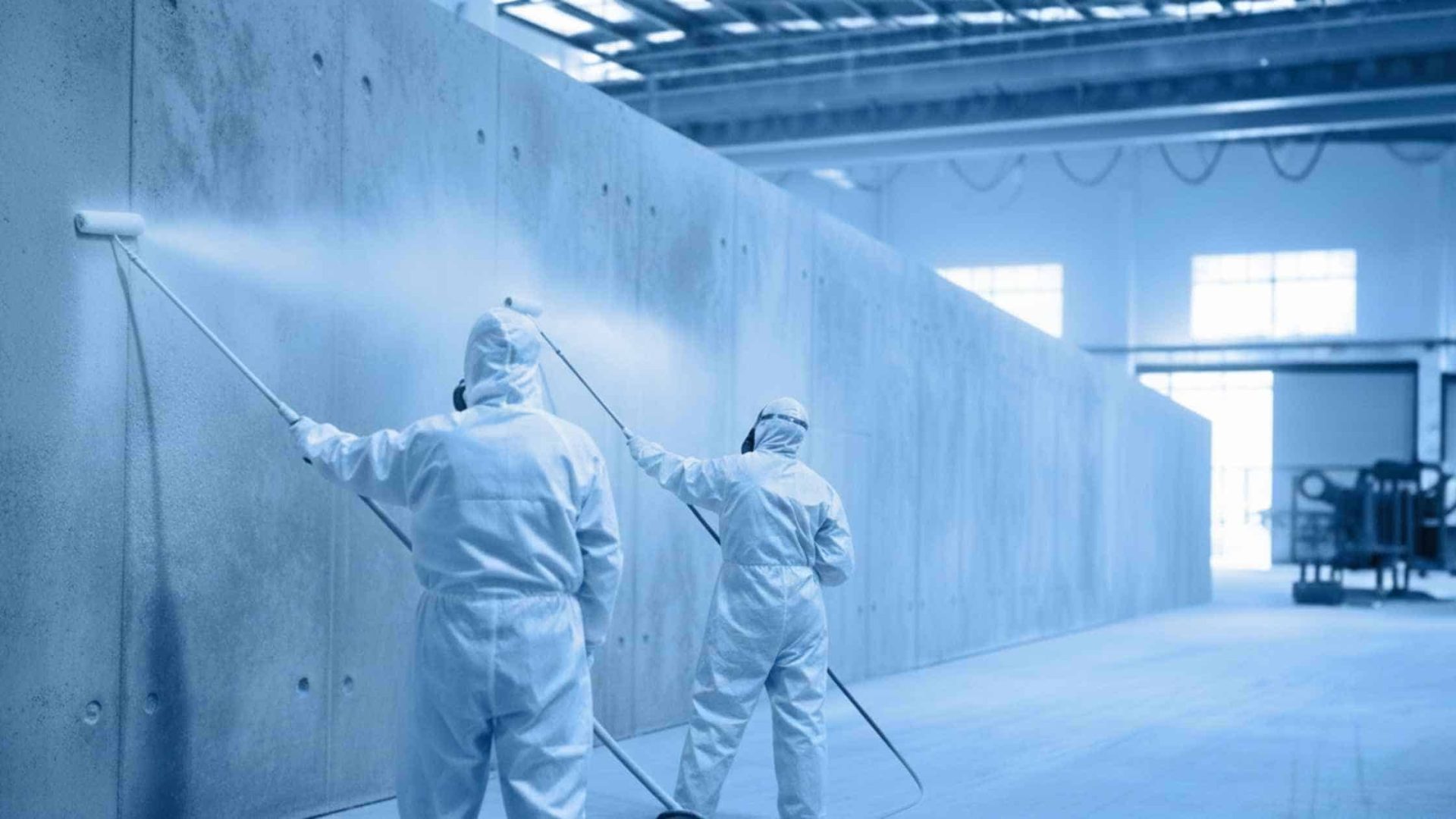
If you manage or operate a manufacturing facility, you already know that not every paint job is created equal. The walls, floors, ceilings, structural steel, and equipment in an industrial environment take a beating that ordinary paint simply cannot handle. When it comes time to coat or recoat your facility, two categories come up in nearly every conversation: epoxy and high-performance coatings. Choosing the right industrial coating for your specific environment is one of the more important decisions you can make for long-term surface protection, and it is not always obvious which direction to go.
This guide breaks down both options in plain language. No sales pitch. Just practical information to help you ask better questions and make a more confident decision.
Why the Coating Choice Matters More Than Most People Realize
A lot of facility managers focus on cost and color when evaluating a recoat project. Both matter, but neither one tells the full story. The coating type you choose has a direct effect on how long the job lasts, how well it holds up under chemical exposure or temperature changes, how easy it is to maintain, and how much downtime your next recoat will cost you.
Getting this wrong is expensive. Not just the material cost, but the labor to strip and redo a failed coating system. If you have ever walked into a facility where paint is flaking off structural steel or a wall coating is bubbling and peeling, you have seen what happens when the wrong system gets applied to the wrong surface in the wrong environment.
So let’s look at how these two categories actually compare.
What Is Epoxy, Exactly?
Epoxy is a two-component coating system. That means it comes as two separate parts, a resin and a hardener, that get mixed together just before application. Once they cure, they form an exceptionally hard, dense surface that bonds tightly to the substrate beneath it.
Epoxy coatings are known for:
- Strong adhesion to concrete, steel, and masonry
- High resistance to chemicals, solvents, and oils
- A smooth, cleanable surface finish
- Good resistance to abrasion and physical impact
- Durability in environments where surfaces get wet or are regularly cleaned with chemical agents
Epoxy is a popular choice in food processing plants, pharmaceutical facilities, and manufacturing environments where cleanliness is non-negotiable and the surfaces need to withstand repeated washdowns. It performs well in areas with exposure to lubricants, cutting fluids, or mild chemicals.
One thing to be aware of with epoxy is that it does not like UV exposure. On exterior surfaces or areas that receive direct sunlight, epoxy tends to chalk and yellow over time. This does not necessarily compromise the protection it provides, but it does affect appearance. If aesthetics matter, a topcoat or a different coating system may be a better fit for sun-exposed areas.
Epoxy also tends to be rigid once cured. That characteristic is part of what makes it so hard-wearing, but it also means it can crack if the substrate beneath it shifts or flexes. In older facilities where substrates have settled unevenly or where there is known structural movement, that rigidity can become a liability.
What Are High-Performance Coatings?
High-performance coatings is a broader category that includes a range of products engineered for demanding environments. This includes polyurethanes, polyureas, alkyds modified for industrial use, moisture-cure urethanes, zinc-rich primers, and others. The defining characteristic is that these coatings are formulated specifically to go beyond what standard architectural paint can do.
High-performance coatings are used when:
- A facility has surfaces exposed to extreme temperature fluctuations
- Exterior steel structures need protection against corrosion and weathering
- A coating needs to flex slightly without cracking (such as on metal panels or structures that expand and contract)
- Extended service life is the priority over lowest upfront cost
- A substrate requires a multi-system approach with a primer, intermediate coat, and topcoat
In manufacturing environments, high-performance coatings are commonly used on structural steel, equipment supports, exterior surfaces, rooflines of production buildings, and any area with aggressive chemical exposure or high heat.
Polyurethane topcoats, for example, offer excellent UV resistance compared to epoxy. They hold color and sheen well over time, which matters on exterior surfaces. Moisture-cure urethanes can be applied in cool or damp conditions where other coatings would struggle to adhere properly.
How Do They Compare Side by Side?
Here is a straightforward comparison of the two across key performance categories:
Chemical Resistance Epoxy performs very well against oils, solvents, and mild acids. High-performance urethanes and specialty coatings can be formulated for more extreme chemical environments. If your facility has particularly aggressive chemical exposure, the specific product matters more than the general category.
UV and Exterior Durability Epoxy fades and chalks under sunlight. High-performance topcoats, especially polyurethanes, hold up much better outdoors. For any exterior application, a high-performance topcoat is usually the right call.
Flexibility and Substrate Movement Epoxy is rigid. High-performance urethanes and other flexible coatings can tolerate movement in the substrate without cracking. If you are coating metal panels, older structures, or surfaces that experience thermal expansion, flexibility matters.
Application Conditions Epoxy has specific requirements around temperature and humidity at the time of application. Some high-performance coatings, particularly moisture-cure urethanes, offer more flexibility in challenging application conditions.
Service Life Both can achieve a service life of seven to twelve years when properly specified, applied to a well-prepared surface, and maintained. Surface prep is the single biggest factor in how long any coating system actually lasts.
Cost Epoxy products are often less expensive per gallon than premium high-performance systems. However, cost-per-gallon comparisons are misleading without factoring in coverage rates, number of coats required, and expected service life.
The Role of Surface Preparation
No matter which coating system you choose, surface preparation determines whether the job holds. This is one of the most underestimated parts of any industrial painting project.
Epoxy and high-performance coatings both require the substrate to be clean, dry, and profiled correctly before application. On steel, that typically means abrasive blasting to a specified profile. On masonry or concrete, it often means grinding, patching, and priming. If any contamination, rust, or loose material remains on the surface, even the best coating system will eventually fail from the bottom up.
When evaluating contractors or bids for your facility, pay close attention to how much time and detail goes into the prep scope. A bid that seems low often gets there by cutting corners on preparation. That savings gets wiped out quickly when you are scheduling another recoat ahead of schedule.
So Which One Should You Choose?
The honest answer is that it depends on your specific environment, your surfaces, and what you are asking the coating to do. A few useful questions to work through:
- Is this an interior or exterior application?
- What is the substrate? (Concrete, steel, masonry, drywall, block)
- What will the surface be exposed to? (Chemicals, heat, moisture, UV, physical impact)
- How long do you need the coating to last before the next planned maintenance cycle?
- Is appearance a factor, or is pure function the priority?
In many facilities, the right answer is actually both. An epoxy system makes a strong choice for interior walls, wash-down areas, and surfaces with chemical exposure. A high-performance urethane or specialty coating makes more sense for exterior steel, structural components, and areas with UV exposure or temperature swings. Multi-system approaches that layer a primer, body coat, and topcoat from different product categories are common in industrial work for good reason.
What to Look for in a Contractor
Selecting the right coating product is only half the equation. The contractor applying it needs to understand industrial coating systems, surface prep requirements, and application conditions. Ask any contractor you are considering about their experience with two-component systems, their approach to surface prep, and how they handle containment and cleanliness in an occupied facility.
The best outcomes in industrial coating work come from contractors who treat the spec seriously, communicate clearly throughout the project, and do not cut corners on the prep phase. The coating is only as good as what it is applied to and the hands that apply it.
Final Thoughts
Epoxy and high-performance coatings are both legitimate, proven systems. They are not competing options so much as tools that fit different situations. Understanding the difference between them puts you in a better position to have more productive conversations with your contractor, write a tighter scope of work, and get a result that holds up over the long term.
If you are planning a repaint or recoat project at your facility, take the time to get the specification right before you start collecting bids. The upfront investment in the right system almost always pays for itself in service life and avoided rework.
